
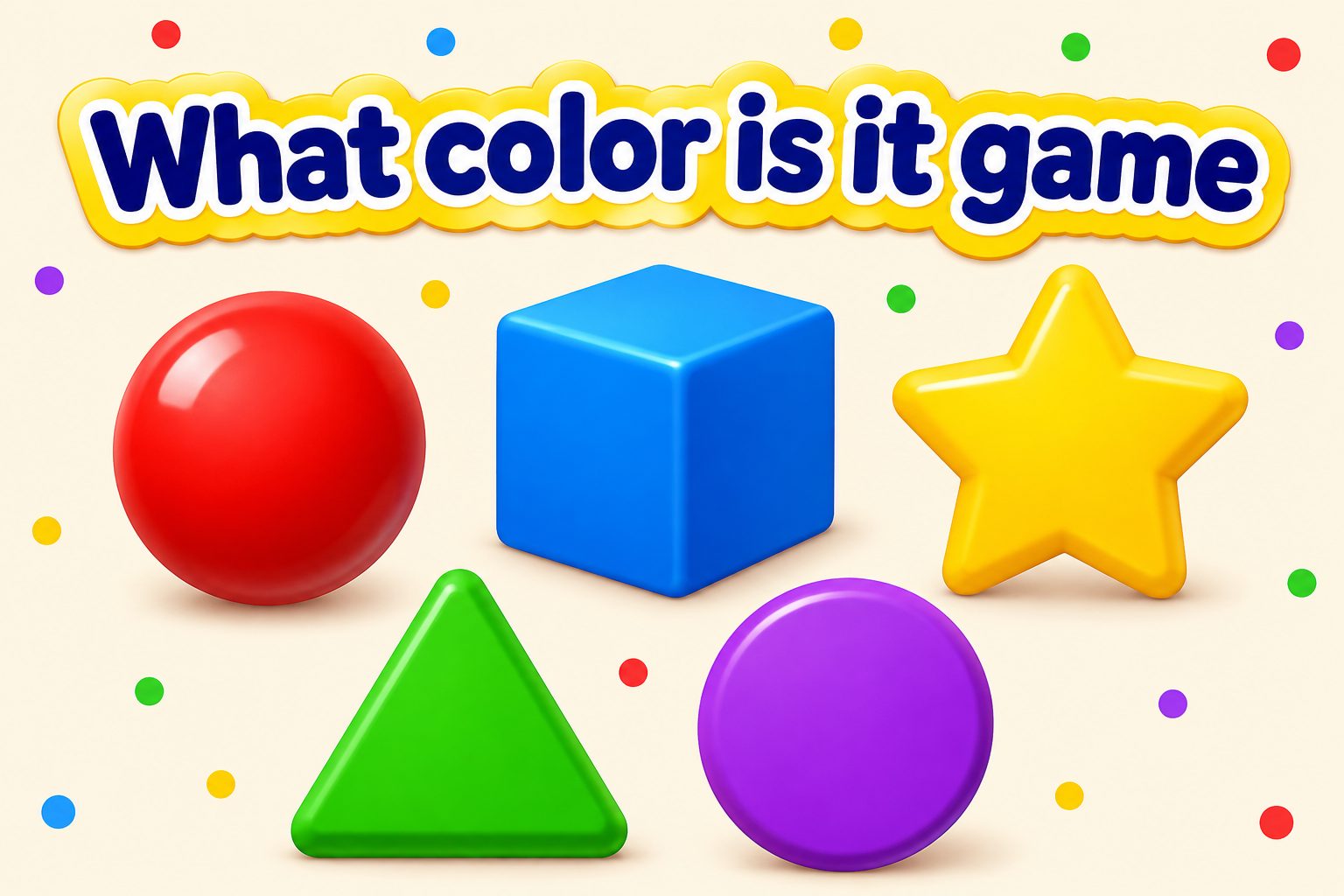
The what color is it game is a simple guessing activity that turns everyday colors into a lively learning challenge. A player sees an object, card, screen, or clue and names its color. Although the rules are easy, the game can build observation, vocabulary, confidence, and quick thinking for children and adults.
It works almost anywhere: at home, in a classroom, during travel, at a party, or while waiting in line. Players can point to real objects, use colored cards, describe shades, or ask questions. The best version matches the age, attention span, and skill level of the group.
This guide explains what the game means, why it is useful, how to play it well, common mistakes to avoid, and fresh ways to make it more interesting. You will also find practical examples and answers to common questions.
At its core, the game asks players to notice color and communicate what they see. One person may hold up an item and ask, “What color is it?” while another gives an answer. The answer can be basic, such as red or blue, or more specific, such as teal, burgundy, or lavender.
Color words are often among the first descriptive words learners use. They help people sort objects, follow directions, describe clothing, discuss art, and notice details in their surroundings. A relaxed game gives repeated practice without making the activity feel like a lesson.
The activity can be cooperative or competitive. In a cooperative round, everyone works together to name colors accurately. In a competitive round, players earn points for correct answers, fast responses, or detailed descriptions. Both styles can be valuable when the mood stays encouraging.
A strong game does more than test memory. It invites players to look carefully at lighting, patterns, and nearby colors. A navy shirt may look nearly black in a dim room, while a turquoise toy may appear blue to one player and green to another. Discussing those differences improves visual awareness.
The best approach is flexible. Start with familiar colors and real objects, then add new shades, timed rounds, clues, categories, or storytelling as players become more comfortable. Clear rules and a friendly pace keep the game useful for a wide range of abilities.
How Does the What Color Is It Game Work?
1. Choose Simple Color Materials
Begin with objects that are easy to see and identify, such as blocks, crayons, clothing, fruit, paper, or household items. Strong lighting matters because shadows can change how colors appear. For beginners, select clear primary and secondary colors before introducing similar shades or patterned objects.
2. Ask One Clear Question
Show an object and ask, “What color is it?” Give the player enough time to look before expecting an answer. Short, consistent wording makes the game easier for young children and language learners. If needed, offer two possible answers instead of immediately correcting them.
3. Accept Reasonable Color Names
Color categories are not always exact, especially with shades such as aqua, teal, indigo, beige, and coral. Decide in advance whether broad answers are acceptable. If an object is blue-green, recognizing both blue and green as thoughtful observations can keep the game fair and positive.
4. Add Vocabulary Gradually
Once players know basic color names, add descriptive words such as light, dark, bright, pale, warm, and cool. You can ask whether a color is light blue or dark blue, for example. This grows vocabulary while keeping the central question familiar and easy to follow.
5. Use Turns To Maintain Focus
Taking turns prevents one confident player from answering everything. Let each person choose an item, ask the question, or give the answer. Rotating roles also helps players practice speaking, listening, and waiting, which are useful social skills beyond the color activity.
6. Adjust Difficulty With Clues
When an answer is difficult, give a useful clue rather than simply revealing it. Mention an object with a similar color, ask players to compare two items, or narrow the choice to a color family. Good clues support learning while preserving the satisfaction of solving the round.
7. Finish With A Quick Review
End by revisiting a few colors that caused hesitation. Ask players to find another object in each color or use the color in a sentence. A short review strengthens recall and gives everyone a clear sense of progress without extending the game beyond their attention span.
Why Is the What Color Is It Game Useful?
1. It builds everyday vocabulary because players repeatedly hear and use color words in meaningful situations.
2. It strengthens visual discrimination by encouraging players to compare shades, brightness, and color families.
3. It supports listening skills when players follow prompts, wait for turns, and respond to clues.
4. It can increase speaking confidence because answers are short, concrete, and easy to practice.
5. It makes early learning more active than memorizing color names from a list.
6. It encourages curiosity about objects, nature, clothing, art, and the environment.
7. It can be adapted for individual play, small groups, mixed ages, and different learning goals.
Key What Color Is It Game Tips
- Keep Lighting Consistent: Use daylight or bright room lighting whenever possible. Poor lighting can make correct answers seem wrong and may frustrate players who are trying to look carefully.
- Start With Familiar Items: Everyday objects reduce unnecessary difficulty. A red apple or yellow pencil lets players focus on the color rather than guessing what the object is.
- Match The Pace To Players: Fast rounds can be exciting for confident players, but beginners benefit from pauses. Give enough thinking time before offering clues or moving to the next turn.
- Use Positive Corrections: If an answer is not quite right, respond gently. You can say that the item looks green with a little blue, then invite the player to compare it again.
- Avoid Overloading Vocabulary: Do not introduce many unusual shades in one session. Repeat a few new words across several rounds so players can remember and use them naturally.
- Include Real-World Context: Ask where players might see a color in daily life. Connecting orange to a traffic cone or green to leaves helps make color words memorable and practical.
What Are Fun What Color Is It Game Variations?
1. Color Hunt Challenge
Ask players to find an item of a named color within a room or outdoor area. Set a gentle time limit only if it suits the group. This version adds movement and makes players scan their surroundings, which is especially engaging for energetic children.
2. Mystery Object Round
Place several objects in a bag, let a player choose one, and reveal it slowly. Before naming the exact color, players can make predictions based on what they see. This small element of suspense makes a familiar activity feel more like a game.
3. Color By Description
Instead of showing an object immediately, describe something associated with a color. For example, mention a clear daytime sky, a ripe banana, or fresh grass. Players name the likely color, then explain their reasoning to develop language and associations.
4. Memory Tray Game
Arrange colored objects on a tray and allow players to look for a short time. Cover the tray, remove one item, and ask which color is missing. This variation combines color recognition with memory and can be made harder by adding more objects gradually.
5. Sorting And Matching Round
Give players mixed items or cards and ask them to group matching colors together. They can sort by exact color, light and dark shades, or warm and cool families. Sorting creates a hands-on version that works well for quieter learners.
6. Storytelling With Colors
Invite players to make a short story using three or four colors they choose. A yellow boat, purple raincoat, and green hill can become a playful scene. This variation uses color vocabulary creatively rather than treating it only as a right-or-wrong quiz.
7. Reverse Question Game
Name a color first and ask players to suggest an object that matches it. Players can answer with real items nearby or imagined examples. This reversal checks whether they can retrieve color knowledge independently and makes the game suitable even without materials.
The what color is it game is effective because it is easy to begin and easy to adapt. A few objects, clear questions, and patient turns can create a useful activity for vocabulary, observation, memory, and conversation.
Start with familiar colors, accept sensible answers, and increase difficulty only when players are ready. Small changes, such as a color hunt or a storytelling round, can keep practice fresh without making the rules confusing.
The goal is not perfect color terminology in every round. It is to help players notice the world more closely, use descriptive language with confidence, and enjoy learning together.
FAQs About the What Color Is It Game
What age is the what color is it game best for?
The game can work for toddlers, school-age children, teenagers, and adults when the difficulty changes with the group. Young players can name basic colors, while older players can compare shades, discuss color families, or use color words in descriptions and creative challenges.
Do I need special cards or equipment?
No special equipment is necessary. Everyday objects, clothing, food packaging, crayons, books, and items around a room can all be used. Colored cards may make setup easier, but the game remains effective when players use real objects they can see and handle.
How can I make the game easier for beginners?
Use only a few clear colors, choose familiar objects, and give two possible answers when needed. Avoid timed rounds at first. Repeating the same colors in different objects helps beginners connect the word with a visual category instead of relying on one example.
How can I make the game harder for older players?
Introduce similar shades, ask players to describe brightness or color temperature, and include memory or clue-based rounds. You can also ask players to identify color combinations, sort warm and cool colors, or explain why an object looks different under changing light.
What should I do if players disagree about a color?
Treat disagreement as a chance to compare observations rather than a problem. Check the lighting, look at the object beside a neutral background, and discuss whether it contains more than one color quality. Broad answers can be accepted when the object genuinely sits between categories.
Can the game support language learning?
Yes, it is especially useful for language learners because color words are common, concrete, and easy to practice repeatedly. Pair each color with an object and a simple sentence. Players can gradually move from single-word answers to fuller descriptions and questions.