
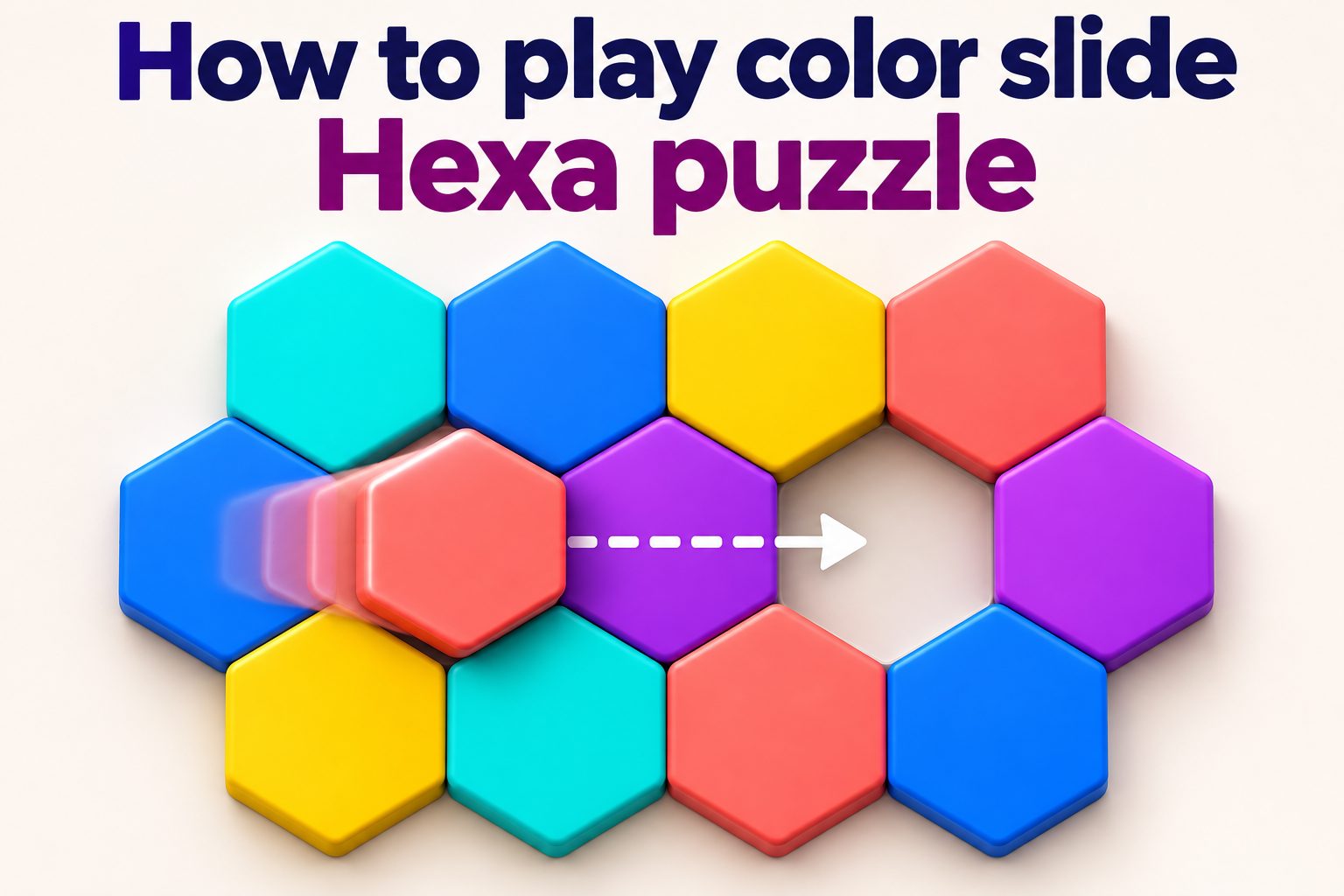
Learning how to play color slide Hexa puzzle is easier once you focus on patterns instead of rushing every move. This relaxing block puzzle asks you to slide colorful hexagonal pieces across a board, match them thoughtfully, and keep space available for future moves.
Although the rules can look simple, strong play depends on planning, color awareness, and smart board management. Each level rewards players who notice which moves create useful openings and which moves leave difficult gaps behind.
This guide explains the core rules, helpful strategies, common errors, practical examples, and ways to improve. Whether you are opening the game for the first time or trying to beat a stubborn level, the goal is to make each slide feel more deliberate.
Color slide Hexa puzzle is a visual logic game built around moving colored hexagonal tiles on a compact board. The exact layout may vary by version, but the main challenge is usually arranging pieces so matching colors connect, merge, clear, or reach the required positions.
A hexagonal board differs from a square grid because each space can touch up to six neighboring spaces. That extra direction creates more possible paths, but it also makes careless moves harder to reverse.
Before making a move, look at the entire board rather than only the tile you want to move. Notice open lanes, blocked corners, groups of the same color, and pieces that may become trapped after a slide.
Many levels have a visible target, such as clearing specific colors, reaching a score, filling a pattern, or completing the board with no pieces left. Read that target first, because a move that looks satisfying may not help the actual objective.
The game is valuable as a short mental exercise because it encourages spatial reasoning, patience, and flexible problem solving. Progress usually comes from recognizing a better sequence, not from making faster moves.
How Do You Play Color Slide Hexa Puzzle?
1. Read The Level Goal
Start by checking what the level asks you to achieve. You may need to combine matching colors, clear a certain number of tiles, guide pieces into marked spaces, or avoid filling the board. A clear target helps you judge whether every slide moves you closer to success.
2. Study The Board Shape
Look at the board edges, narrow channels, fixed obstacles, and empty hexes before touching a piece. Hexagonal layouts often allow diagonal movement, so a route that seems blocked from one angle may be open from another. Board shape determines which tiles are most mobile.
3. Identify Matching Colors
Find the tiles that can work together soon. Matching colors are usually the foundation of clearing or merging actions, so it helps to group them mentally. Do not move a color pair together immediately if doing so would close a useful path for another tile.
4. Slide One Piece At A Time
Make a single move, then pause to review the new arrangement. Sliding too quickly can hide the result of a move and lead to a chain of weak decisions. Careful players use each move to create information about which routes and combinations are now available.
5. Keep Central Spaces Open
The middle of a Hexa board often provides the greatest number of movement options. Try not to fill central cells with pieces that do not need to stay there. An open center gives you room to reposition colors and recover when a plan changes.
6. Complete The Objective Before Space Runs Out
As the board becomes crowded, your choices shrink quickly. Prioritize moves that directly support the level goal while preserving at least one flexible lane. If a match clears space, it may be more valuable than a larger-looking move that leaves the board congested.
What Makes A Strong Hexa Puzzle Strategy?
1. Plan two or three moves ahead instead of judging each slide by its immediate result. A temporary setup move can be useful when it creates a clean path for a later color match.
2. Treat corners carefully because tiles placed there often have fewer exit routes. Put a tile into a corner only when it is part of a deliberate match, target position, or safe holding plan.
3. Use empty spaces as resources rather than wasted areas. A single open hex can let several nearby pieces change direction and can prevent the board from locking.
4. Move blocked colors before they become completely surrounded. A tile with only one open neighbor may be easier to rescue now than after another piece slides beside it.
5. Check whether a merge or clearing move changes the board balance. The best action is often the one that opens several future choices, not simply the first available match.
Benefits Of Playing Color Slide Hexa Puzzle
- Spatial Awareness: The game trains you to visualize movement across several directions and to notice how a board changes after each slide.
- Pattern Recognition: Repeated colors, open lanes, and useful formations become easier to spot with regular play, making difficult levels feel less random.
- Patient Decision Making: Successful levels reward a brief pause before acting, which helps players practice choosing an option after considering its consequences.
- Flexible Thinking: When an expected route closes, you learn to revise the plan and search for a different sequence instead of forcing the first idea.
- Short Mental Breaks: A puzzle level can provide a focused break that feels engaging without requiring a long session or complicated instructions.
- Progress Through Practice: Improvement is visible because players begin to recognize safe placements, risky clusters, and efficient clearing opportunities sooner.
Common Color Slide Hexa Puzzle Mistakes
1. Chasing The First Available Match
An immediate color match can be tempting, but it is not always the best move. Before combining tiles, check whether the action blocks a lane, fills the center, or separates another useful group. Choose matches that improve both the current board and the next move.
2. Ignoring Empty Spaces
Players sometimes focus only on colored pieces and overlook the value of open cells. Empty spaces make repositioning possible and prevent crowded sections from freezing. Protecting a useful gap can be smarter than making a move that leaves the board with no flexible route.
3. Filling Corners Too Early
Corners have limited neighboring spaces, so they can turn into traps. Avoid pushing a tile into a corner just because it fits there. Use corner placements when the tile belongs there permanently or when the move clearly creates a planned match or release.
4. Moving Without Checking Directions
A hex board offers more directions than a standard grid, and players may miss diagonal options. Review every possible path before deciding a piece is blocked. A diagonal slide may preserve the board far better than forcing a tile through the most obvious route.
5. Solving Only One Color At A Time
Focusing on one color can cause the remaining pieces to pile up in awkward places. Instead, track several color groups at once. A move that prepares two colors for later action is often more efficient than completing one group while harming the others.
6. Restarting Before Testing Alternatives
A crowded board does not always mean the level is lost. Slow down and search for moves that create an opening, even if they do not score immediately. Restart only after you have checked the less obvious diagonal routes and temporary repositioning options.
To play color slide Hexa puzzle well, begin with the level goal, study the board, and protect enough open space for future moves. Strong results come from planning sequences rather than reacting to the first match you see.
Pay special attention to corners, central spaces, and colors that may become trapped. Those three areas often decide whether a board remains flexible or becomes difficult to recover.
With practice, you will recognize useful patterns faster and make calmer choices. Treat each level as a small logic problem, and let every slide create a better position for the move that follows.
FAQs About Color Slide Hexa Puzzle
1. What Is The Main Goal Of Color Slide Hexa Puzzle?
The main goal depends on the level, but it usually involves moving colored hexagonal tiles to make matches, clear pieces, reach marked spaces, or complete a target pattern. Always check the objective before playing, because the best move changes according to what the level requires.
2. Is Color Slide Hexa Puzzle Based On Luck?
Luck may affect the starting layout in some versions, but success mostly depends on observation and planning. Players improve by protecting open spaces, recognizing color groups, and avoiding trapped pieces. A careful sequence usually matters more than making fast moves.
3. Why Do I Get Stuck Near The End Of A Level?
Late-game problems usually happen because too many tiles have been pushed into corners, narrow lanes, or the central area. The board then has fewer legal moves. Try to leave an open route while solving earlier parts of the level so you can reposition pieces later.
4. Should I Always Match Colors Immediately?
No. An immediate match is helpful only when it supports the larger board position. Sometimes waiting allows you to create a better match, keep a useful lane open, or prepare another color group. Check what the board will look like after the match before committing.
5. How Can Beginners Improve Faster?
Beginners should slow down, examine all six possible directions around key tiles, and make one deliberate move at a time. Replaying levels is useful because it reveals where an earlier choice created trouble. Focus first on board space, then on advanced combinations.
6. Are Corners Good Places For Tiles?
Corners are useful when a tile has reached its intended destination or can safely join a planned match. Otherwise, they are risky because corner tiles have limited movement. Keep movable or important pieces away from corners until you know the placement will not trap them.